




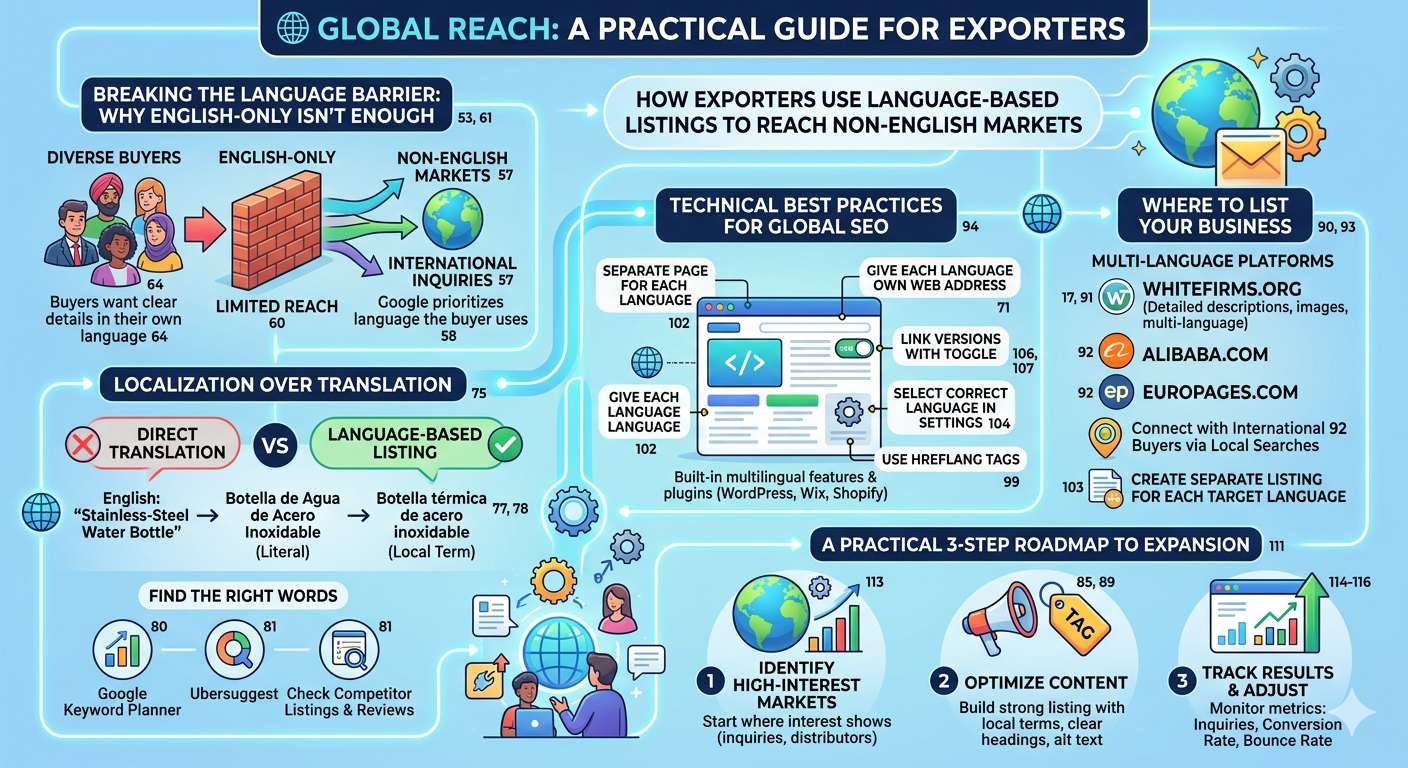
How Exporters Can Use Language-Based Listings to Reach Non-English Markets
Exporters can have great products, certifications, packaging, and shipping, but they may still get questions from buyers who do not speak English. This often happens because supplier information is only in English, so buyers who don't speak English can't easily find it.
For example, an Indian exporter of eco-friendly food containers received little interest from Spanish-speaking buyers, even though their prices were competitive and they held international certifications. When they added a Spanish-language listing with keywords used by Latin American importers, they started receiving inquiries from Mexico and Chile.
Google shows search results in the buyer's language, so choosing the right language is important for being found online. To help you put this into practice, the next section outlines simple steps to improve your online presence, such as adapting your content for different markets and creating listings that attract more buyers. You will find clear, useful tips for using language effectively, setting the stage to understand why English-only listings can limit your reach.
Why English-only listings can hold exporters back
Many exporters believe buyers will switch to English when searching for products. Some buyers do, but you should not count on it. Buyers usually want quick, clear details on product features, uses, and the supplier's trustworthiness. Listings that are not in the buyer’s language are harder to find and understand, so fewer buyers see them before contacting the seller. To address this, let’s explain what a language-based listing is.
Before we discuss solutions, let's clarify what language-based listings are. Understanding this concept clarifies why direct translations may not be effective, as discussed next.
A language-based listing is more than just translating a paragraph on a directory page. It is a clear business or product profile that aligns with how buyers in a specific market search for and select suppliers. For better online results, Google suggests giving each language its own web address and making sure search engines can easily find it. Multilingual content works best when each language has its own page, not when they are mixed together. This way, you can create listings that connect with buyers, use familiar words, and show details clearly to avoid confusion. The main goal is to help buyers understand, not just to make the page look good.
Why direct translation is usually not enough
Exporters sometimes translate product descriptions word-for-word, missing how buyers actually search. For example, translating 'High-Quality Stainless-Steel Water Bottle' as 'Botella de Agua de Acero Inoxidable de Alta Calidad' may not match common search terms. Local phrases like 'Botella térmica de acero inoxidable' or 'Botella térmica de 500 ml' work better. Google advises using real search words and useful content. Even correct translations can fail if they omit local phrases or industry terms.
Exporters can use keyword research tools like Google Keyword Planner or UberSuggest to find the keywords buyers use when searching. Checking competitor listings and reviews also shows common local terms. These steps help you update listings with the right language. Exporters who learn local terms, check competitors, and study buyer searches can create better language-based pages.
Clearly separating each language version provides better results for both buyers and search engines. With this foundation, the following part explains the practical steps exporters should take to create and manage separate listings for each language and how this impacts daily workflows.
Exporters should create a separate listing with regional terms for each target language.
Now that you know what to include, think about what buyers should see right away when they visit your listing.
Language helps buyers find a supplier, and a clear layout helps them decide if the supplier is right for them. A good listing should show product details, common uses, packaging, certifications, rules information, contact options, and delivery details if needed. Google also suggests using clear titles, headings, alt text, and link text to make content easier to understand. Once you have these, consider tools that support listings in many languages. Multilingual business listing platforms can help. For example, Whitefirms.org lets exporters show descriptions, images, and details in many languages, making it easier for buyers to find what they need. Other platforms, such as Alibaba.com and Europages.com, also support listings in multiple languages and connect exporters with international buyers through local searches and product categories. Using different platforms helps exporters reach more buyers and find the best fit for their products. Having the right content and layout is important, but to succeed, exporters also need to focus on the technical setup. To see how technical details help strong listings, let’s look at what steps matter and how search engines handle language-based pages. Based pages.
Even a well-written listing can do poorly if the technical setup is not right. Search engines need to read pages correctly, know the target language for each page, and move between versions easily. Google suggests linking language versions and, when needed, using hreflang tags. Simple steps like adding language-specific pages, linking versions, and setting the language in your site settings can make a big difference. If you are just starting out, here are some basic steps you can take:
On website builders like WordPress, Wix, or Shopify, look for built-in multilingual features or plugins that let you create and manage separate pages for each language.
When using marketplaces like Alibaba or Euro pages, check your account or product settings for language options and create a separate listing for each language you want to target.
For each language page, make sure you select the correct language in your site or listing settings. This helps both visitors and search engines.
Link the different language versions together so buyers can easily switch between them. Many platforms offer a simple toggle for this.
Many website builders offer language options and guides. If you are unsure, ask your web developer or technical support for help. A good technical setup supports strong content and makes sure search engines show the right page to the right audience. Now that this technical groundwork is in place, exporters can move forward with practical strategies to implement these improvements.
A practical way to expand
Exporters do not need to launch listings in every language at once. Start with markets that show interest, such as those with inquiries, distributor talks, or export activity. Create a strong listing for each main language, then track key metrics to see how well each listing performs. Focus on the number of buyer inquiries, conversion rate (the percentage of visitors who become leads or customers), and bounce rate (the percentage of visitors who leave without acting). Watching these numbers helps you see which listings work and where you can improve. By updating wording and adding languages as needed, exporters can keep the process manageable and keep improving quality.
When exporters share product information in the language buyers use to search, it improves both visibility and understanding. Better understanding makes it more likely that buyers will reach out.